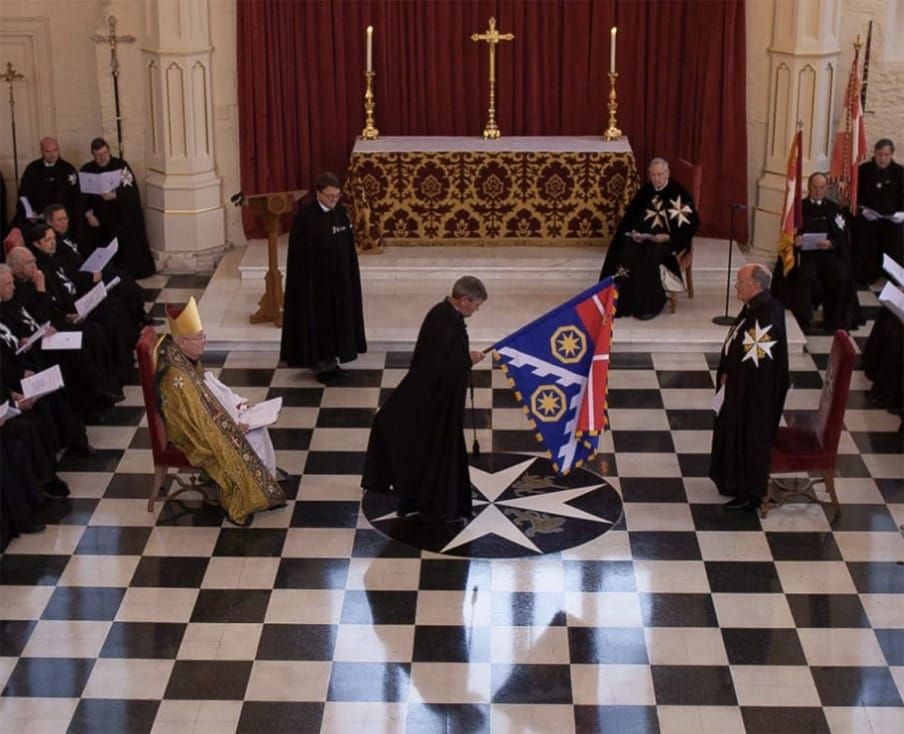
World Religion Day highlights the shared values and teachings that connect faiths across the world. For the Most Venerable Order of the Hospital of St John of Jerusalem, this day reflects its thousand-year history of compassion, service, and respect for all, regardless of faith. In the following piece, Archbishop Emeritus Sir David Moxon, KNZM, GCStJ, Prelate, explores the Order’s interfaith roots and how these principles continue to inspire understanding, conversation, and peace today.
The Most Venerable Order of the Hospital of St John of Jerusalem began in Jerusalem approximately a thousand years ago, within the context of three faiths: Christian, Jewish and Muslim. The Christians who created the Order, initiated their hospice in Jerusalem in the 12th century, referencing the then near one thousand-year-old example of St John the Baptist, who had witnessed and died there for the faith and for humanity. St John the Baptist had become for them the greatest of the human prophetic voices from within the Jewish experience of the world. In Jerusalem members of the Order were also living in an ancient Davidic Jewish scene that the best of them respected.
The original members of the Order knew as well that they were called to love their enemies, and at the time many of the local military opponents of the incoming Latin crusader armies were Muslim. The ethics of the Order meant that the hospital in Jerusalem received and cared for people of all three faiths in the same way, with the same compassion, triage and medical care. Patients of all kinds and beliefs were treated as the Lords, as it were, of the Christian serving brothers and sisters.
This sacred mission for the faith and for humanity had deep within its ethos and teaching, the life transforming wisdom that the key to world peace lay within a love for neighbour, and for the other. The first members of our Order believed that people are created in the image of God, and that this image however unrecognizable, or marred, or forgotten, should determine our ways of relating to each to the other. ‘Team Human’ in other words. Their paradigm, their parable was of course the heart-moving, boundary transcending and life-giving story of the Good Samaritan in Luke 10. Here a person from another faith normally at odds with local believers, offers lifesaving first aid at great risk to himself to an anonymous person of a different faith, simply because they are a fellow human being in desperate need.
World Religion Day therefore can mean a great deal to this Order we now find ourselves a part of. World religious experience to us is generic and essential to the way we are from our very beginnings.
The other great reality for the Order of St John at the time of its founding, is the fact that Christian, Jewish and Muslim roots all go back to Abraham, who lived in the early second millennium BCE, roughly 2100 BCE to 1900 BCE. Judaism and Christianity trace descent through Abraham and Sarah’s son Issac, while Islam traces descent through Abraham’s first son Ishmael from his wife Hagar, Sarah’s servant. This is a family of faiths then that can interrelate meaningfully because they recognize some ancient common tap roots.
The Order of St John was first recognized by Pope Paschal II in 1113. Today Popes honour some of the compassion and values that can be found in all healthy religious traditions by hosting a World Day of Peace in Assisi from time to time, inviting all the major faiths to individually contribute in their own way. The faiths each share something of their own tradition and then make a common statement, calling for the end of war as a means of resolving conflict, including those who kill in the name of religion.
The religious leaders don’t stand together as if they were all a theological puree, ‘nothing in particular ‘group. Their variety witnesses to a form of unity in diversity in the name of a more peaceful world, without glossing over the very different styles and belief systems that everyone brings to the peace table. World Religion Day is therefore totally appropriate for the order to commemorate from this precedent amongst others. We can be influenced by this example in terms of best practice today.
Another crucial worldwide initiative in these difficult days is the World Parliament of Religions. They describe themselves as follows:
The Parliament Today (The Organisation)
- Mission: To cultivate harmony, encourage engagement on critical issues, and promote a world where diversity is celebrated for the common good.
- Activities: Organises major global conferences (like the one held in Chicago in 2023) and initiatives like FOCUS24.
- Focus: Works on solving global challenges such as climate change, human rights, and promoting peace through wisdom and compassion from all faiths.
Key Themes & Impact
- Unity & Diversity: Explored common ground and shared values, but also highlighted tensions and differences in beliefs.
- Interfaith Dialogue: Established a framework for ongoing conversations between different spiritual and religious traditions.
- Global Platform: Provides a vital platform for spiritual leaders and activists to unite and address worldwide concerns.
A further witness to this potential was the 2014 Joint Declaration Against Modern Slavery I helped facilitate, involving world religious leaders in Rome hosted by Pope Francis. Other leaders included Anglican, Orthodox, Muslim (Shia and Sunni) Jewish, Buddhist and Hindu faiths. The Declaration promised collective action to work together across all faiths to end all forms of modern slavery. Those gathered committed to mobilisation to engage faith communities, businesses and governments, and to provide victim support. These world religious leaders sought to promote ethical supply chains, scrutinising supply chains for forced labour.
But how can world religions influence the course of events for world peace when a lasting peace can seem so elusive and fraught, with seemingly insurmountable complexities at times? We can take some encouragement from the fact that for most people in the world, a faith base is their personal reality. This widespread soft power with its potential for a spirituality of compassion, is potentially capable of overcoming enmity, prejudice and deep-seated division, in the end.
The sharp end of conflict is always reported in the press, because of the death and destruction it describes, but there are many more often invisible faith-based grass roots movements for peace that can go unnoticed. These impulses can have an uncanny resilience and durability. They can mean that war burns itself out finally, and something green and hopeful comes back, to grow meaningful and cooperative community again. The survival of the most cooperative seems to be a God given driving force in creative evolution and the adaptability of a species, rather than a ‘dog eat dog’ dogma. In the long run, the survival of the most vicious is not actually the prime environmental reality. In the human world violent tyrants always fall in the end, as Mahatma Ghandi opined. He was right.
Another reality that can encourage us today, is the fact the world religions now meet and greet each other in their uniqueness, not in the pretense that they are all the same and therefore spiritually monochrome. Contemporary multi faith dialogue seeks to respectfully ‘pass over’ from one faith to another in awareness, sensitivity and discernment, to learn from the good that the other may have to offer.
Then the believer returns to their own faith heritage, possibly enriched by the way in which some recognizable goodness has expressed itself in the other. Because wherever there is goodness there is God, since God is the source of all that lives and breathes, and initiated the world beholding that it was very good. This process does not involve syncretism, or a superficial niceness, but a deep care for what matters most of all to somebody else. Walking for a mile in another’s moccasins has long been attested to for its value and outcomes.
The Christian Bible witnesses to aspects of this process as follows. Jesus interacted positively with gentiles (non-jews) like the Canaanite woman in Matthew 15, and demonstrates openness to diverse people and their faith, even praying for those outside Israel. Jesus focusses on hospitality, healing, and recognizing faith across boundaries. He is looking for integrity, like the centurion’s faith being praised in Matthew 8, showing that God honours genuine belief regardless of background. There can also be a genuine moment when the image of God in someone, recognizes the spirit of Christ in someone else.
As above, for Christians Christ’s revelation is unique and our order comes from this place, but a deep awareness and respect for each other whoever they may be, is also the mind and heart of God in Christ. I can therefore do no better than end with the words of Tracy Frederic, Commincations Officer from St John International:
“Highlighting the faith side of St John is important as it reflects the organisation’s core values. While St John is known for its medical and humanitarian work, sharing the faith perspective helps show how it guides our principles, service, and global impact. There isn’t an official theme announced for World Religion Day 2026, but the focus remains on its core purpose: promoting interfaith understanding, tolerance, and shared values of unity and peace”.
As it was in the beginning, is now and ever shall be.
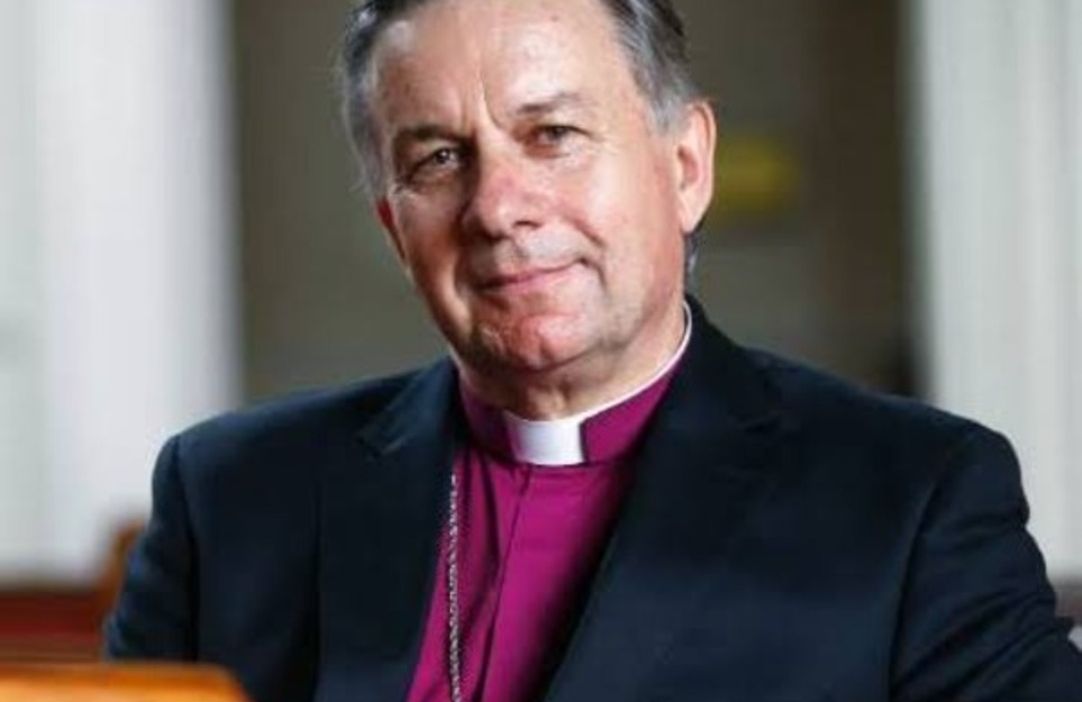
Archbishop Emeritus Sir David Moxon KNZM, GCStJ.
Prelate.