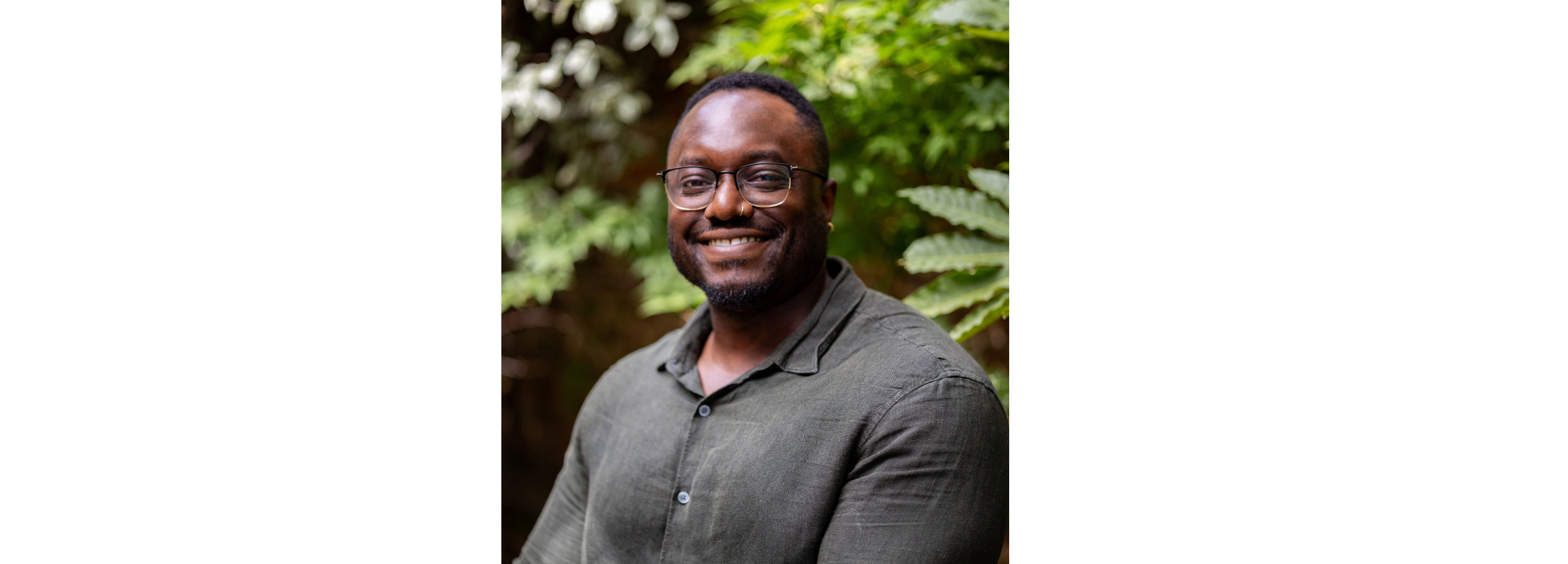
Get to know Sean Blair, Fundraising CRM Manager at SJI. Sean shares his journey into fundraising, what brought him to SJI, and what he has discovered during his first few months with the organisation.
From the role of CRM in supporting the fundraising team to the impact of technology and innovation on the future of fundraising, Sean offers an insight into his work, his experiences and what he is looking forward to as his career develops. He also shares a little about his life outside of work, including his passion for rock and metal music.
What did you do before joining St John International, and what brought you to SJI and fundraising?
Before joining St John International, I worked for a small, national cancer charity as its Fundraising and Partnerships Lead. I was responsible for corporate partnerships, challenge events including the London Marathon, and applying to trusts and foundations; a very varied role! This was my first role in fundraising, having previously spent time in business development, account management, and health and fitness.
I was drawn to the charity sector – and fundraising specifically – after having been the beneficiary of several charities during my treatment for Hodgkin’s lymphoma. After recovering, I became a charity ambassador, speaking at events and working on campaigns, and this led me to want to have a greater impact. Fundraising was a natural entry point to the charity sector for me, as I have experience of building trusted relationships, writing proposals, and stewarding partnerships. I really enjoy getting to know people and their interests and finding solutions that are mutually beneficial. This means that fundraising is a strong fit for me.
When I saw my current role at St John International advertised, I knew it would be a good fit for me: work with an international focus, an organisation with a rich and proud history, and a position that would help to expand programmes around the globe. After meeting with several members of the team during my interview, I was sure SJI would be a good home for me. I joined in May this year and couldn’t be any happier.
Can you tell us a little about your role as Fundraising CRM Manager and what your day-to-day work involves?
I’m very fortunate that my role is rich and varied and, so far, no two days have been the same. As Fundraising CRM Manager, my role has both an internal and external focus. Internally, I am responsible for our customer relationship management (CRM) system, which stores supporter, donation, and event data, among other information. I help my colleagues to use the system to support their roles, ensure all data is accurate, and manage things like our donation forms and the interface between the CRM and our financial data.
Externally, my role broadly includes duties related to supporter engagement, which could involve working on events like St John International’s inaugural summer garden party or writing cases for support to share with prospective donors. SJI’s fundraising team is dynamic, so there’s always something new to get involved with.
What have your first few months at SJI been like, and what have you found most interesting so far?
My first few months at SJI have flown by, and I’m shocked to be in my fifth month already. I find that the days zip past very quickly, especially when I am in the office with my colleagues.
The thing that I have found most interesting is the history of the Order. Like most people in the UK, I was familiar with St John Ambulance and St John England, but learning about the rich history and international work of the wider St John family has been really important to me. It puts everything that we do day-to-day into perspective when you realise you are working in a tradition of service extending back to the first Hospitallers.
What has surprised you most about working in fundraising?
The thing that has surprised me most about fundraising is the variety: the variety of work, supporters, and avenues for raising funds. Over the last few years, I have worked on community fundraising events including skydives, featured in a photographic exhibition for a corporate partner, and applied for funding from foundations, among many other streams of work.
The variety is what I personally really enjoy, and my role at SJI offers plenty of this day-to-day. In the last week, I have been researching health conferences for our team to attend in the next 12 months, worked on a case for support for prospective donors, and met with colleagues from APAC St John associations to discuss the future of fundraising and collaboration in the region.
Is there anything from your previous experience that has been particularly useful in your new role?
I began my career in business development, selling compliance and anti-money laundering software into the financial services industry. In this role, I would speak with everyone from administrative staff to Chief Compliance Officers and CFOs who held the ultimate financial responsibility. As a fresh university graduate, it was easy to be intimidated by people with far more experience and knowledge than I had, but at the end of the day, everyone is human and – I believe – just wants to do the best job they can. This mindset stayed with me throughout my career and across industries.
Learning this perspective early in my career has definitely helped me in fundraising. We meet with a variety of people from all walks of life, and remembering that everyone has a unique mission and personality makes it easy to enjoy and get the most from interactions. At the end of the day, if someone is willing to meet with you to discuss funding your organisation or a programme, that’s half the battle; finding out about their interests and what would encourage them to give is the part of the puzzle I enjoy.
How does CRM support the wider fundraising team?
I believe that a good CRM sits at the heart of an effective fundraising team because it gives us a clear, shared picture of our relationships and opportunities and our overall financial position. It helps us track the progress of important information like trust and foundation applications, so we can see what stage things are at, what needs to happen next, and where support and collaboration might be needed. In a small and dynamic fundraising team, that visibility is important.
It also gives us the donor and prospect intelligence we need to make better decisions: who to contact, when to contact them, and what they are most likely to be interested in. Alongside that, it allows us to track financial information, from donations received to forecasting and income linked to specific opportunities. When used well, CRM is not just a database; it is a tool that helps the fundraising team to prioritise the things that will make us successful in the long term.
To give a specific example of how our SJI CRM has been used, it was vital in our preparations for St John International’s inaugural summer garden party in July. We designed our invite in the system, so the details of anyone who responded were automatically stored in the CRM. We were also able to capture information including dietary and access requirements, which is useful for this and future events. Attendees could also donate to SJI directly through the form, and so we now have donor information for over 50 new supporters. This is just one way our CRM is of use to the team, and it’s now my job to find other ways for it to support us in our vital work.
What are you most looking forward to as you continue to develop your career in fundraising?
I’m very interested in technology and innovation, and I am aware of many different systems that intersect with fundraising: from microdonation technology in retail to AI grant finders and writers, and of course, CRMs. We’re at a point in time where technological advancement is happening at a rapid rate, and this will undoubtedly affect how our work in fundraising is done. I’m really looking forward to seeing where the sector is in 3–5 years and which tools stand the test of time and bring real value to the work that we do. Technology, at its best, can level the playing field so smaller organisations can compete with those who have more resources. I aim to be proactive in identifying new technologies to expand the possibilities of what I can achieve in my career at SJI.
And finally, when you’re not working, what’s something you enjoy doing that people might be surprised to learn about?
I have played the guitar since I was about twelve years old, and my musical tastes are on the heavier side. I like to listen to and play various kinds of rock and metal music, which, to my wife’s surprise, I find very relaxing. I don’t get out to as many gigs as I used to, but if you see me with my headphones in, I will undoubtedly be listening to some heavy, guitar-led music.