Malaria remains one of Papua New Guinea’s most persistent public health challenges, particularly affecting children and young people in both urban and rural communities. Limited access to timely information and basic health knowledge often leads to delayed treatment and preventable complications.
Recognising the need for community-based education, National St John Ambulance PNG (NStJA) integrated malaria awareness into its First Aid in Schools (FAIS) program, an initiative aimed at equipping young people with life-saving skills and essential health knowledge.
The Initiative
Launched in 2018 as a pilot program in three National Capital District secondary schools (Badihagwa, Marianville and Kila Kila), FAIS quickly demonstrated strong impact and demand.
With funding support from the Sir Brian Bell Foundation, the program has since expanded nationwide, reaching over 13,000 students across Papua New Guinea.
This year FAIS will be delivered in 15 out of 22 provinces in the country including: National Capital District (NCD), Central, Morobe, Eastern Highlands, Madang East Sepik, Western Highlands, Simbu, Milne Bay, Gulf, New Ireland, Manus, West Sepik, East New Britain and Autonomous Region of Bougainville.
Program Approach
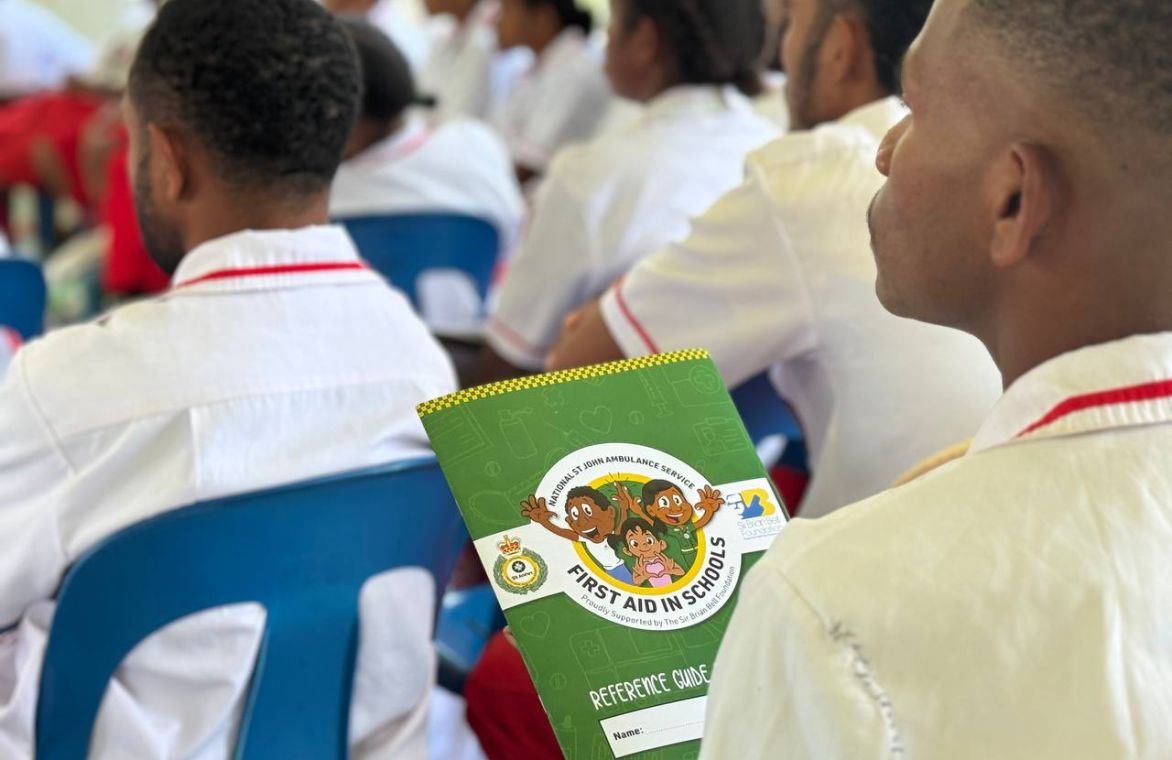
FAIS delivers a full-day interactive training combining theory and hands-on practice. Students learn essential first aid skills alongside critical public health topics, including malaria.
Key Components of Training
- Principles of First Aid
- Hygiene and Handwashing
- Infectious Diseases and Prevention
- Dehydration and Diarrhoea
- Emergency Response (DRSABC)
- CPR (adult and infant)
- Management of common emergencies (choking, asthma, bleeding, burns, fractures, snakebites, etc.)
Malaria education is a core component of the FAIS curriculum.
How Malaria Education is Delivered
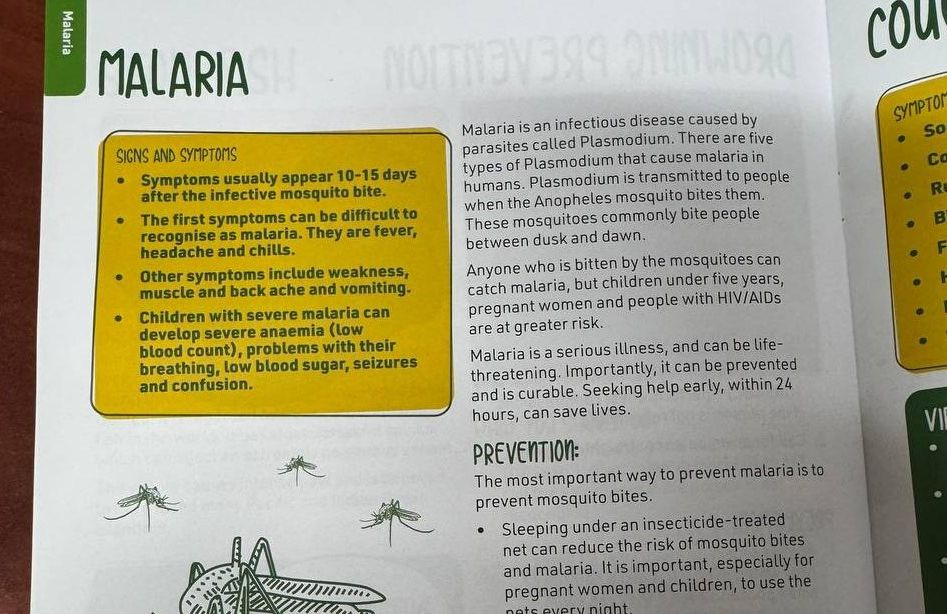
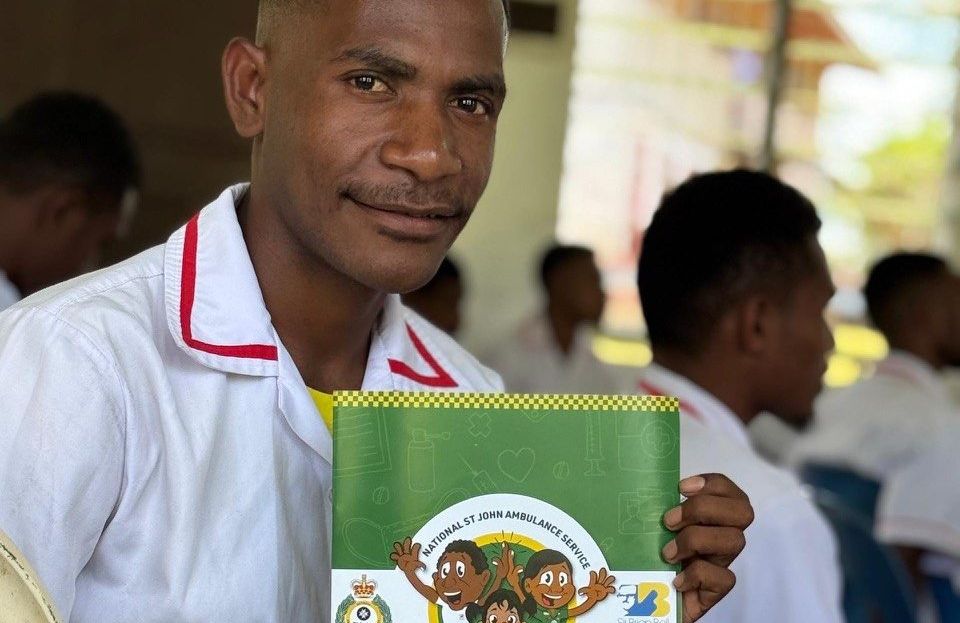
- Each student receives a First Aid in Schools Workbook, which includes a Malaria Fact Sheet
- Trainers provide guided explanations of:
- What malaria is (an infectious disease)
- Signs and symptoms (e.g., fever, chills, headaches)
- Prevention strategies (e.g., mosquito control, hygiene practices)
- Sessions are interactive, with:
- Group discussions
- Question-and-answer segments to reinforce learning
- Knowledge is tested through simple assessments at the end of sessions
Additionally, the malaria fact sheet is publicly accessible through the NStJA website under the Pacific Komuniti First Aid Guidelines, extending its reach beyond classrooms into the wider community.
Impact
The FAIS program has made a significant contribution to malaria awareness and prevention:
- Over 13,000 young people educated on malaria since 2018
- Increased early recognition of symptoms, leading to quicker care-seeking behaviour
- Improved community-level awareness, as students share knowledge with families
- Strengthened preventive practices, particularly around hygiene and disease control
By targeting students, the program creates young health ambassadors who carry knowledge into their homes and communities.
Why This Matters
Malaria prevention is not only about treatment—it requires awareness, early recognition, and behaviour change. In many communities, young people are powerful agents of change.
Through FAIS, National St John Ambulance PNG is:
- Bridging critical health knowledge gaps
- Building community resilience
- Reducing preventable illness through education
The First Aid in Schools program demonstrates how practical education can transform health outcomes. By embedding malaria awareness into first aid training, National St John Ambulance PNG is not only saving lives but also empowering the next generation with the knowledge and confidence to protect their communities.
With continued support from partners like the Sir Brian Bell Foundation and Provincial Education Divisions, FAIS is well-positioned to expand its impact and play a vital role in the fight against malaria across Papua New Guinea.
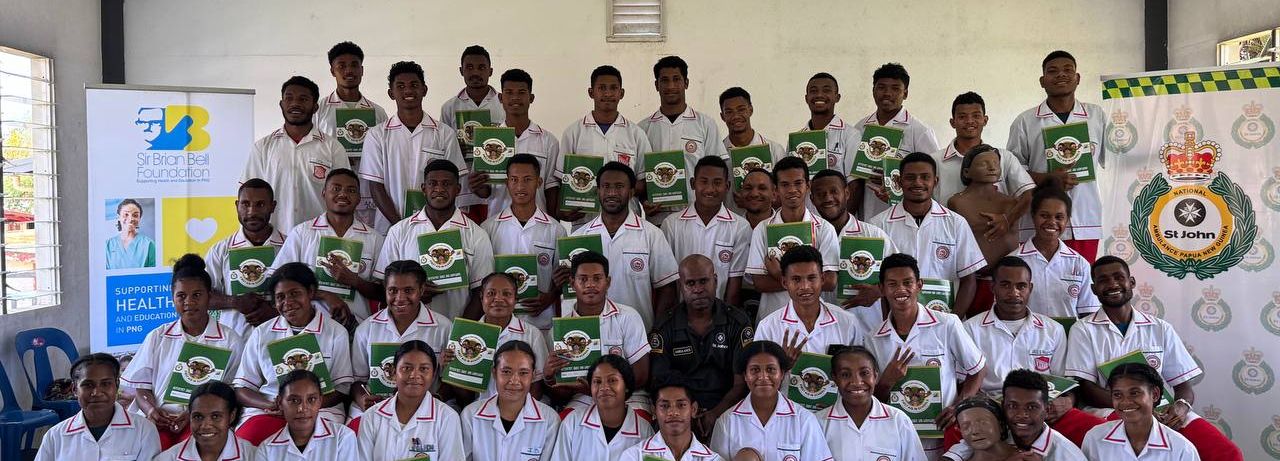
The images in this article are from the FAIS program visit to the Iarowari Agro Technical Secondary School in Sogeri in Hiri-Koiari District in Central Province, PNG.