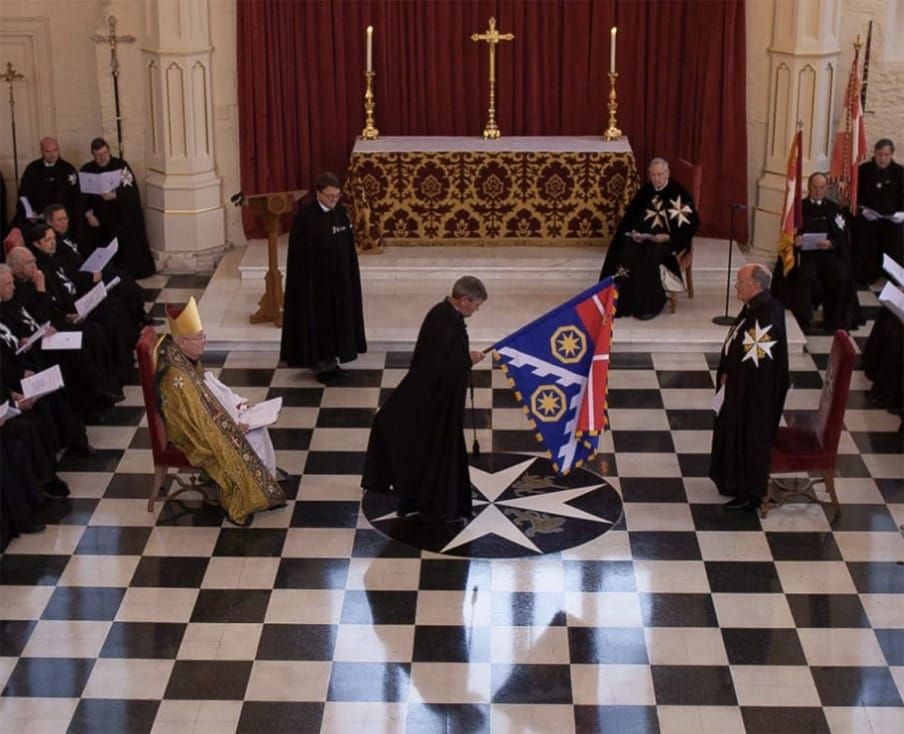

On Wednesday 26th November 2025, His Royal Highness The Duke of Gloucester hosted a dinner at St James’s Palace to celebrate the international work of the Order of St John.
It was a marvellous opportunity to thank our supporters and to welcome friends old and new to learn more about our impact on our local communities around the globe.
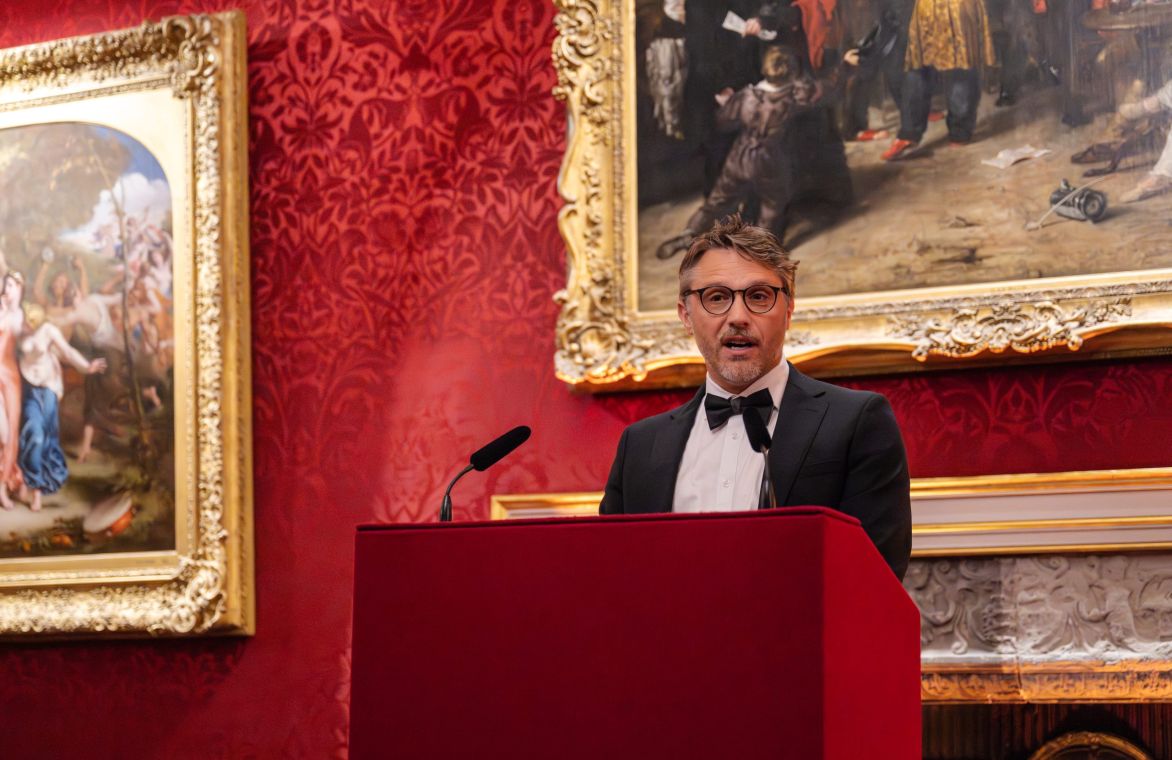
We heard from three members of our St John family, who we share below, in addition to welcomes from our Grand Prior, The Duke of Gloucester, our Lord Prior, Professor Mark Compton and our Master of Ceremonies, our Secretary General, Susan le Jeune d’Allegeerscheque. What felt most powerful during all stories shared throughout the evening was that everyone who stood at the microphone had multiple personal connections to the work of St John; connections that were often outside of the scope of their current roles. The impact of our work is people, and that was felt this evening as we shared warmth, hope and solidarity in making the world a kinder, healthier, and more caring place for all.
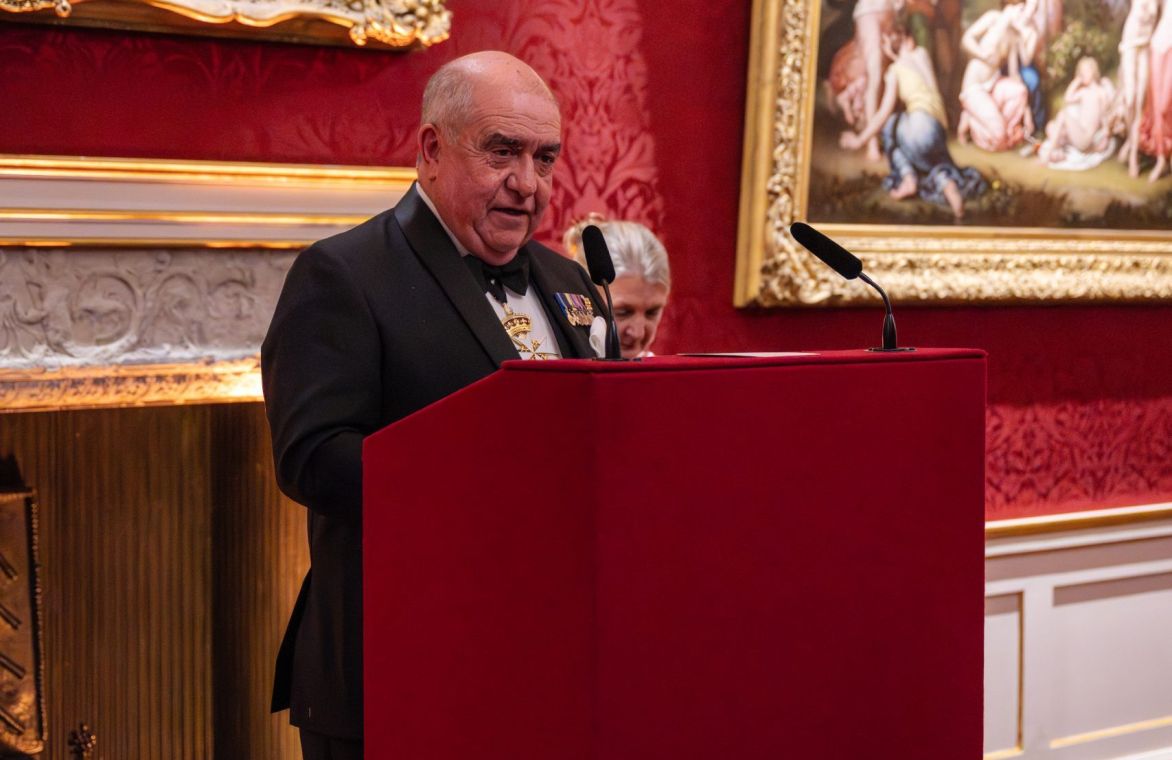
Gareth Walker, speaking on behalf of St John Ambulance Kenya
Highway Emergency Response Programme
About 15 years ago, My family and I were living in northern Kenya in a town called Maralal, about 6.5 hours drive north from Nairobi.
Every 6 weeks or so, I would have to take a drive down to Nairobi for work. It took us around 4 hours before we would reach the nearest paved road, and I recall at that time thinking two things – firstly how wonderfully smooth a paved road feels after 4 hours of off road driving, but secondly I noted how dangerous it became as speeds increased and, especially as we headed up the hills of rift valley, how the very dangerous overtaking started.
During my time in Kenya, I witnessed the aftermath of several accidents, I was nearly involved in a couple, and, had I stayed longer, I am sure that my experience would be similar to that of many Kenyans – I would have lost someone I knew to a road accident.
Kenya’s roads, indeed, Africa’s road network, is expanding. Without significant rail networks, and limited air options, road is the key transport route for goods to get to and from the coastal ports. More roads = more growth and prosperity.
But there is another side to that equation. In the UK, our roads and driving behaviour needs very careful regulation – speed limits, driving licences, vehicle maintenance and checks, breathalysers, and so on. Safety on the road has long been taught. The world knows this. Sustainable development Goal 3.6 targets a 50% reduction in road death and injury by 2030. The rising African economies are not ignorant of this at all – but on a tight budget, regulation is not always enforceable.
The situation is a recipe for disaster, and sadly, disaster is exactly what we are seeing on Kenya’s roads.
On average, 13 people died on Kenya’s roads every day in 2024. A further 45 people are seriously injured every day.
These numbers are going up in 2025.
If the worst happens, and you are involved in an accident, there is no state ambulance service to come and save you – you rely on bystanders, on the community around you.
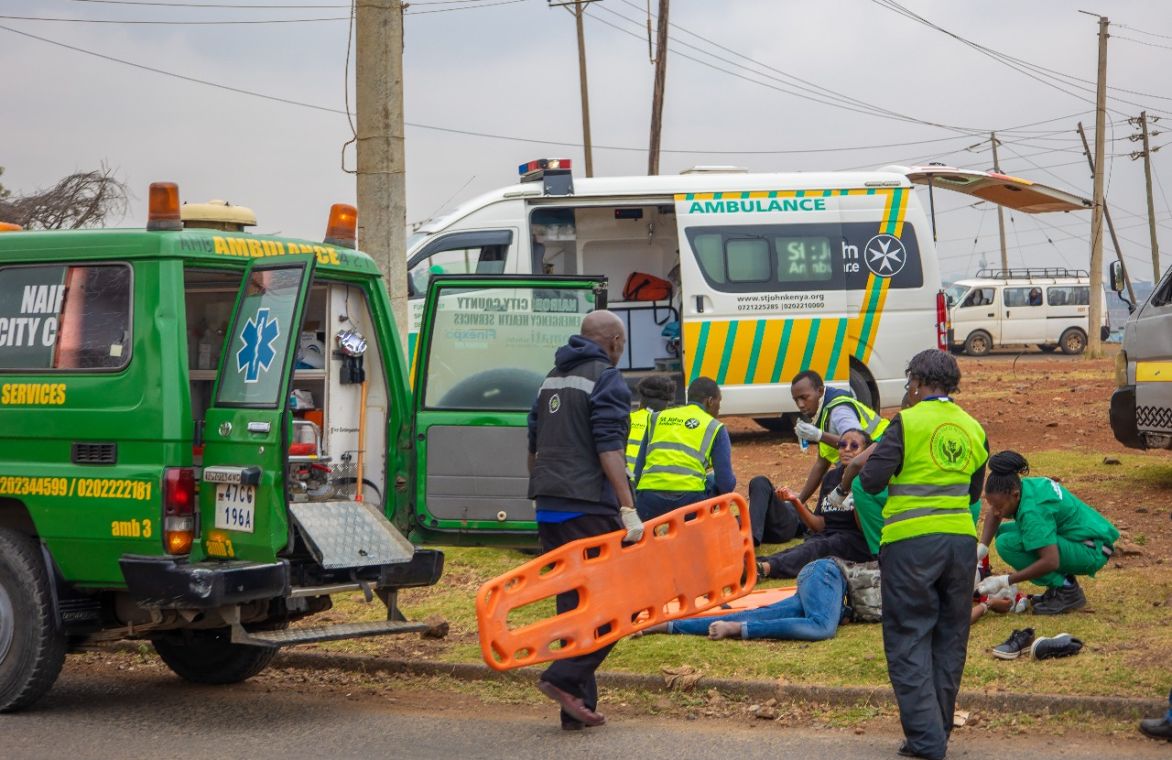
This is where St John Ambulance Kenya are uniquely positioned to act. With over 10000 trained adult first aid responders around the country, St John are present in communities all along the main highways.
With help from a generous donor, (Thank you Dr Paulsen) St John Kenya are in the process of equipping and training volunteer first responders from communities near traffic accident black spots. Community members are stepping up to help, volunteering to be on duty, providing a 24 hours 7 days a week service. St John are providing them with the training and equipment they need to make a difference and save lives. 19 first aid posts will be set up over the coming years.
However, we also know that first response from communities, although vital, is not enough on its own. The efforts of the volunteers need to be followed with a clinical response.
This is where the “Ambulance” in St John Ambulance Kenya comes in.
Ambulances, all staffed with graduate Emergency medical technicians, will be deployed to work in concert with the community first responders, transporting patients quickly and safely to hospitals where advanced medical care can take over.
In a recent visit to Kenya, we visited a hospital on the rift valley, one of the areas where St John Kenya are starting to work. The emergency doctor at the hospital told us how he sees patients who have died on the way to the hospital, because of poor transport options – motorbikes or private cars. Airways that are not protected and cleared mean that victims suffocate on the way. He told us of situations where a bus would pull up at the hospital – a full size coach become make shift ambulance for a mass casualty event. He told us how he had to walk down the aisle of the coach conducting triage, and sadly finding many already dead.
St John Ambulance Kenya’s aim is to have highly trained community responders on the scene of an accident within minutes. Ambulance care will arrive within 30 minutes, providing medically supervised transportation to an emergency hospital. Within the first 60 minutes, a period that paramedics call “the golden hour” the patient will be in a hospital. This will save lives.
St John are an organisation founded in building the ability to care for the sick throughout society. As a global organisation, we provide the state paramedic service in several countries, Australia and New Zealand most notably but also in developing countries like Papua New Guinea. Building the capacity for communities to care for the sick is even more widespread. Our name is synonymous with First Aid. We are world leading in pre-hospital care. We know how to do this.
St John is present today in 11 African countries . Our work has already started, not just in Kenya, but in Malawi, Zambia, Ghana and others. I ask you this evening to imagine the difference St John will make to thousands of lives when we can apply our expertise and experience to the problems they face.
Martin Gangnier, speaking on behalf of St. John Ambulance Canada
Leading the Fight Against Opioid Poisonings
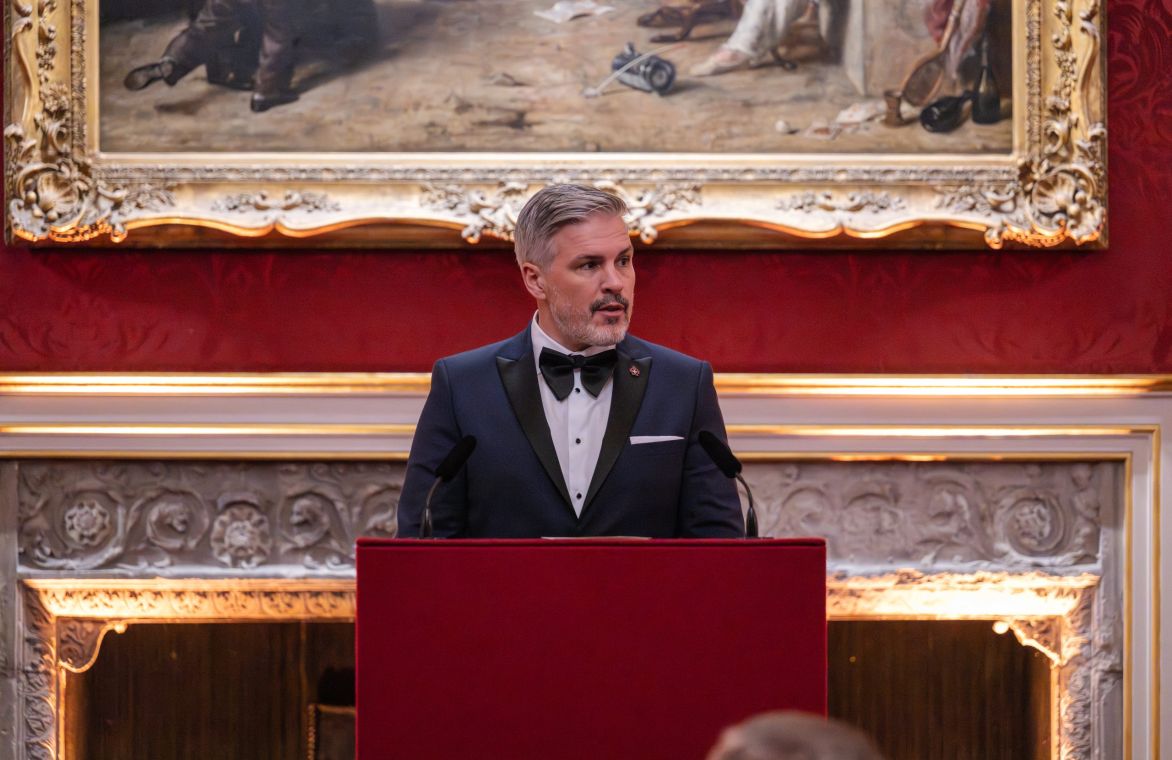
Tonight, I want to speak to you about a crisis that touches every corner of Canada—the opioid epidemic—and how, together, we can save lives.
Opioids are a broad class of drugs primarily used to relieve pain; common examples include morphine, codeine, and fentanyl. When used as directed, opioids can effectively manage severe pain, but their powerful effects also carry a high risk of addiction. Misuse or accidental exposure can lead to opioid poisoning, resulting in respiratory failure, loss of consciousness, and death. In 2016, the Government of Canada declared an opioid crisis, in response to the growing number of opioid-related fatalities.
The opioid crisis is not just a headline. It is a daily tragedy. In the past year alone, more than 7,000 Canadians lost their lives to opioid poisonings. That’s an average of 18 people every single day—more than double the number of lives lost in traffic accidents in Canada. Each number is a person: a parent, a colleague, a friend, a child. Their loss ripples through families, workplaces, and communities.
This crisis knows no boundaries. It affects our largest cities and our most remote regions. It is not just a health emergency—it is a social, economic, and humanitarian challenge.
But there is hope. And that hope begins with action.
With the support of Health Canada, St. John Ambulance launched the Opioid Poisoning Response Training Program—a national initiative focused on prevention, education, and empowerment. Our mission is simple: to give Canadians the knowledge and confidence to save lives.
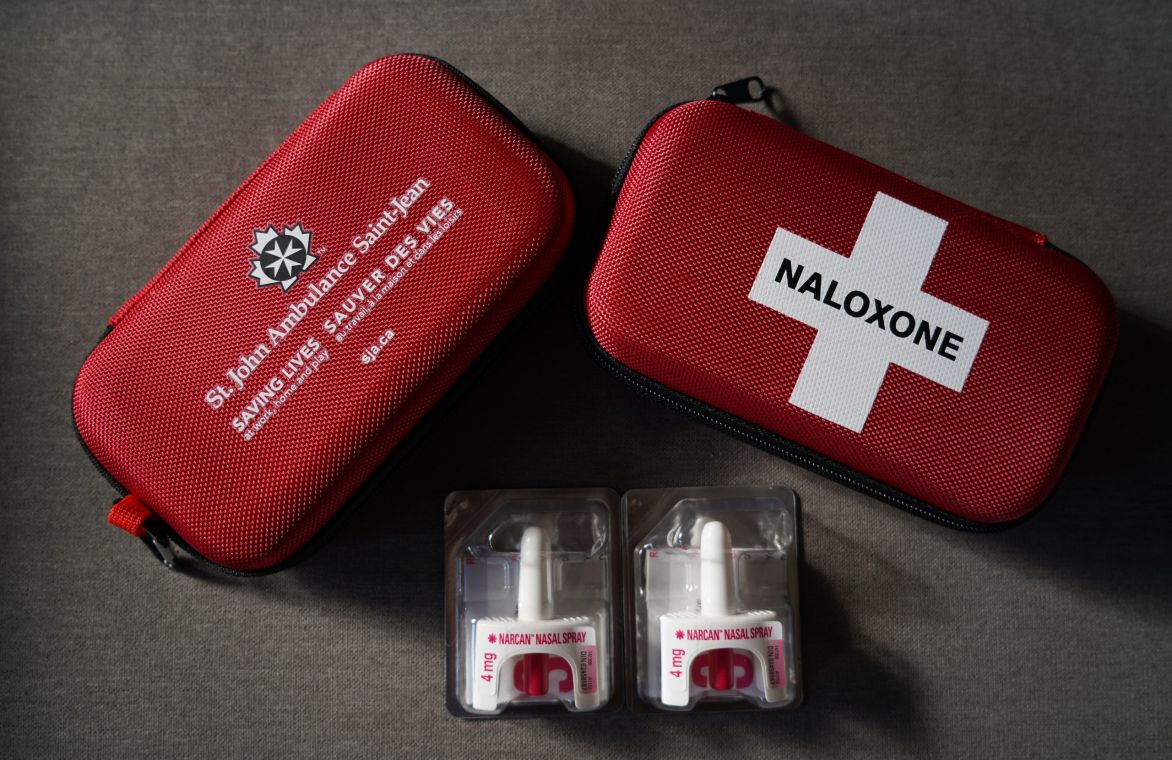
We teach people how to recognize the signs of opioid poisoning and how to respond using nasal naloxone (Narcan)—a medication that can reverse a poisoning in minutes.
The impact has been extraordinary:
- Since 2021, every St. John Ambulance First Aid and CPR course now includes an opioid awareness portion—reaching over 1.1 million Canadians with life-saving information.
- Over 65,000 Canadians are trained in deep and specialized opioid response.
- Approximately 100,000 nasal naloxone kits have been distributed—placing life-saving tools directly into the hands of individuals, workplaces, and community organizations.
That means 1 million + people—teachers, construction workers, office staff, parents—now know what to do when faced with an opioid emergency.
We have seen ordinary Canadians step forward with extraordinary courage. People who never imagined they would face such a situation yet responded swiftly and confidently—just as our training prepared them to.
But our work is about more than responding to emergencies. It is about breaking stigma, raising awareness, and helping people understand that opioid misuse is a health condition—one that calls for empathy, support, and accessible care.
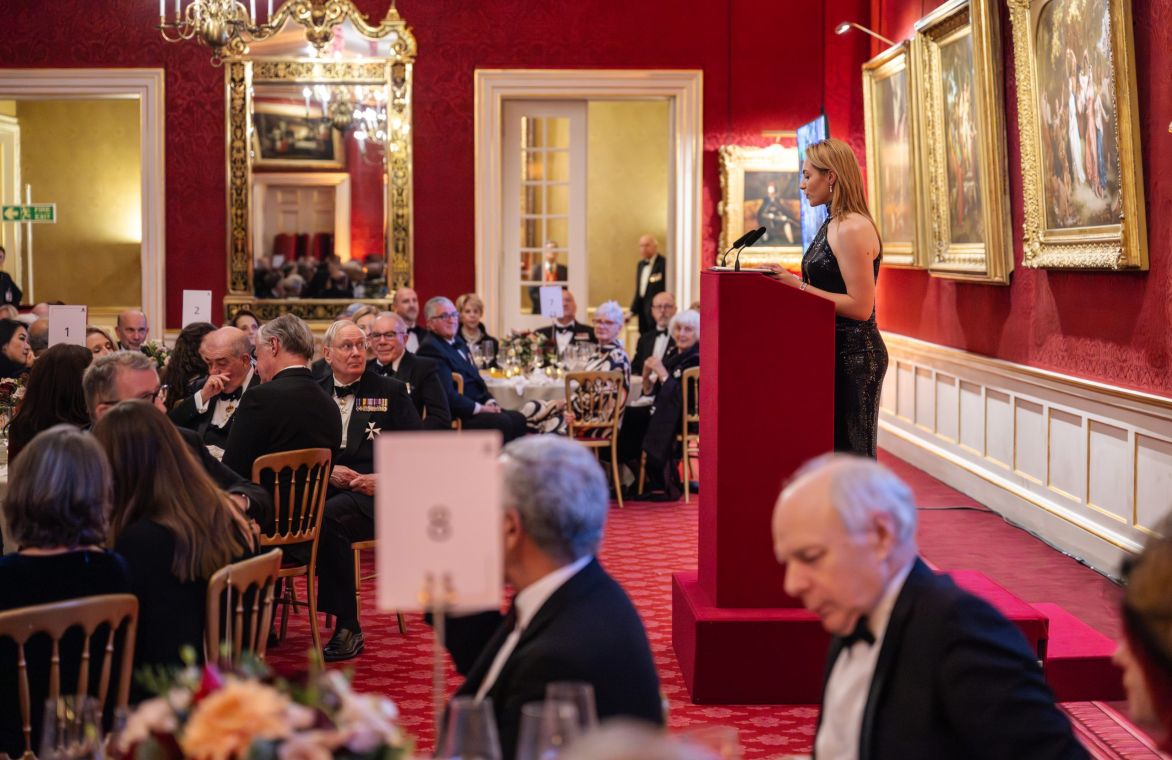
Dr Gloria Montebello, speaking on behalf of St John Ambulance and Rescue Malta
St John Ambulance and Rescue Malta
Malta is a place where the story of St John is deeply woven into our nation’s very identity.
Our islands have long been a sanctuary of service. Centuries ago, the Knights of St John arrived on Maltese shores not merely as warriors, but as men devoted to the care of the sick and the protection of the vulnerable. From the wards of the Sacra Infermeria in Valletta to the shelters they built for the poor and the weary, they laid down a legacy of compassion and resilience that continues to guide us today.
And so, when the modern St John Ambulance Association was founded in England in 1877, it seemed only natural that Malta would become one of its earliest outposts.
By 1909, under the sanction of the Governor, the Valletta Division of the St John Ambulance Brigade was officially formed. From that moment, Maltese volunteers began serving both military and civilian communities with doctors, nurses, and citizens united by one calling: to serve in the name of St John. That enduring flame, kindled over a century ago, still burns brightly today.
Our volunteers now serve in a very different world than that of the Knights. Yet our mission remains clear: to be at the forefront of training and innovation, to ensure a fast and effective response to unpredictable and complex situations. We now operate with thermal imaging drones, remotely operated vehicles for under water searches and advanced rescue vehicles, fire trucks and rescue boats that allow us to complement and extend the capabilities of the Civil Protection in Malta whenever duty calls.
I have had the honour of being part of that story since 2019. When I first joined St John Ambulance Malta, I was welcomed not simply into an organisation, but into a family – a family bound by shared values, shared purpose, and an unspoken understanding that service is both a duty and a privilege.
Holding the rank of a Medical Officer and as a Doctor currently specialising in Psychiatry, I have witnessed both the physical and psychological dimensions of care. My early years in Emergency Medicine at our national hospital, Mater Dei Hospital, taught me that, in moments of crisis, compassion and clarity are as essential as clinical skill. And yet, on the road, during our duties at public events,from large national celebrations to village festivals, I am reminded that every encounter, no matter how small, carries the potential to affirm human dignity.
St John Ambulance and Rescue Malta has undergone remarkable transformation in recent years. The unification of the Ambulance Branch and the Rescue Corps stands as a testament to our collective growth as a symbol of regeneration and integration. This integration reflects not merely administrative efficiency, but it embodies the idea that the strength of our organisation lies in unity — the coming together of distinct skills, disciplines, and generations under one banner of service. Our volunteers come from all walks of life: from students and tradespeople to engineers, medics, and professionals united by a single purpose: to serve humanity in its hour of need.
Equally vital is our investment in training and education. We place great importance on professional courses in first aid, emergency response, and rescue operations but also on peer-to-peer sessions that foster mentorship, friendship, and solidarity.

And because service extends beyond rescue, our volunteers regularly lead environmental initiatives as well, such as recovering hundreds of kilograms of waste from Maltese sea beds, combining marine conservation with operational training.
Our constant drive to grow and improve not only strengthen our operational readiness but also fuels our volunteers, who work tirelessly to engage the public through community educational campaigns, raising awareness about first aid and public safety. These initiatives remind us that prevention is as noble a mission as response; that caring for one another begins not in crisis, but in everyday life.
As I stand here tonight among esteemed members of the global St John family, I am filled with pride and gratitude — pride in how far our Maltese branch has come, and gratitude for the countless volunteers who give their time, their patience, and their hearts to uphold our motto: Pro Fide, Pro Utilitate Hominum — For the Faith and in the Service of Humanity.
From the ancient infirmaries of the Knights to the modern ambulances and rescue vehicles that patrol our streets, the mission of St John has remained constant: to bring light where there is darkness, hope where there is despair, and healing where there is suffering.
And as we look to the future, let us remember that our strength lies not only in the uniform we wear or the skills we master, but in the kindness we extend and the humanity we embody.
For it is through service that we truly honour the spirit of St John.
Photography at St James’s Palace: Fergus Burnett Photography.